
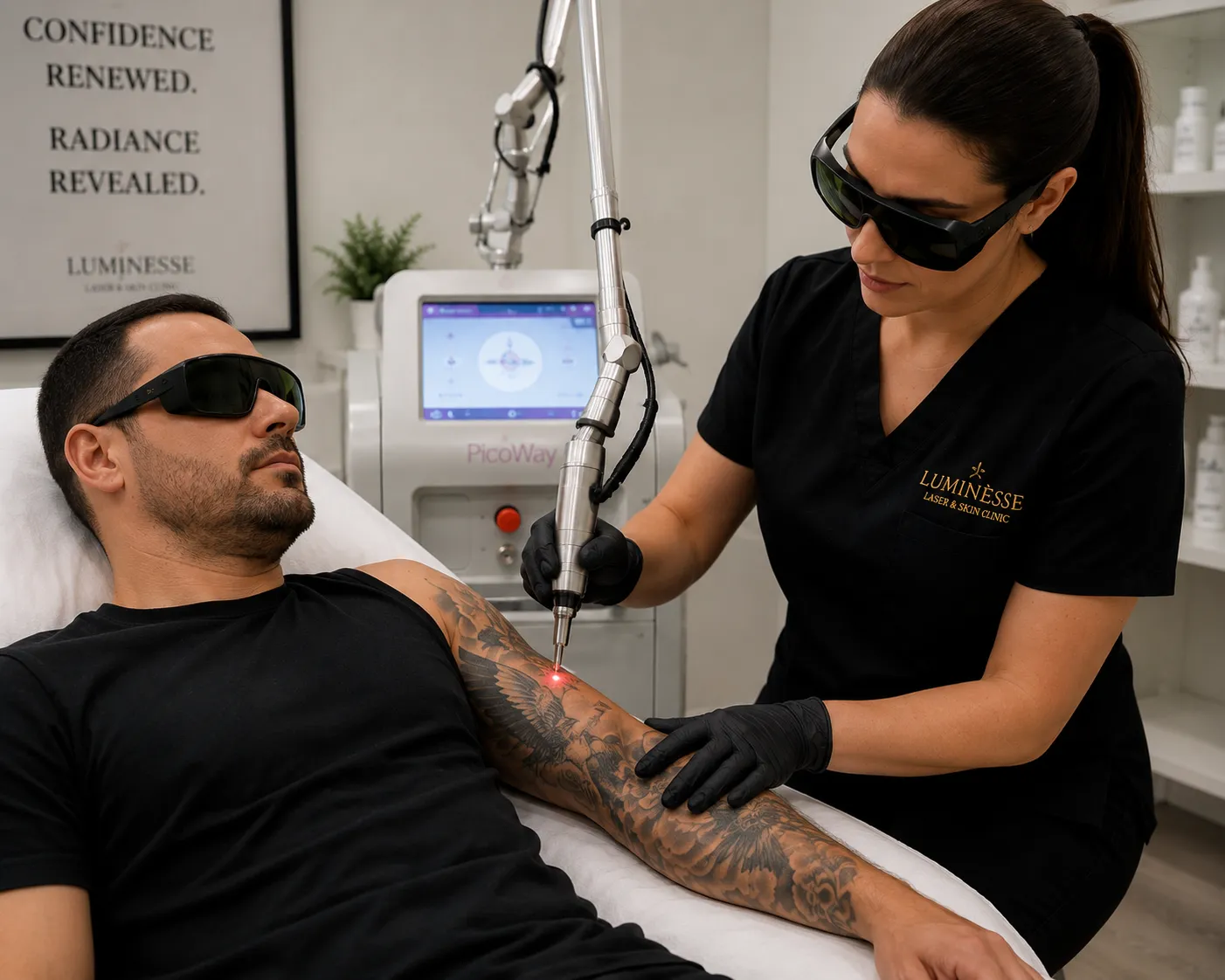
PicoWay�laser tattoo removal uses picosecond pulses to shatter ink particles through a photoacoustic effect rather than heat. This advanced technology breaks down difficult ink colors and previously treated tattoos more effectively than older nanosecond lasers. The body9s natural processes then eliminate the fragmented particles, resulting in significant lightening with reduced risk of scarring or textural changes.
PicoWay picosecond laser device used for tattoo removal
What is PicoWay Laser Tattoo Removal in Ottawa: How It Works, Sessions & Cost Breakdown?
PicoWay laser tattoo removal uses ultra-short energy pulses to shatter unwanted ink. The treatment breaks down tattoo pigment from the inside out without relying on prolonged heat.
PicoWay is a picosecond laser tattoo removal system intentionally designed to work from the inside out. It erases unwanted ink more effectively than older technologies. The laser delivers high peak power and pulses measured in trillionths of a second. This speed creates a photoacoustic effect that shatters ink particles while minimizing thermal damage to surrounding tissues. Older nanosecond lasers depend on heat, which increases scarring risk. PicoWay avoids that trade-off.
Luminesse Laser & Skin Clinic provides expert laser treatments in Ottawa, Ontario. The clinic uses advanced technologies including the PicoWay system. This equipment ensures high effectiveness with fewer sessions and less risk of scarring. Clients receive treatment in a private, professional setting with certified practitioners.
How does picosecond technology differ from older lasers?
Traditional lasers use nanosecond pulses that heat the ink until it fractures. That thermal approach damages nearby skin. PicoWay delivers energy in picoseconds, a fraction of the time. The ink shatters through pressure rather than heat. Surrounding tissue stays cooler and safer. Recovery is faster and complications are rarer.
What makes PicoWay effective for stubborn ink colors?
Multi-wavelength capability sets PicoWay apart. The system targets difficult colors including greens, blues, and reds. Previously treated tattoos that resisted other lasers often respond to PicoWay. The photoacoustic mechanism fragments ink into smaller particles than thermal methods achieve. The body’s lymphatic system clears these tiny particles naturally over several weeks.
A complete laser tattoo removal guide always emphasizes technology selection. The wrong laser prolongs treatment and raises complication rates. PicoWay’s picosecond delivery represents the current standard for safe, efficient ink clearance across all skin types.
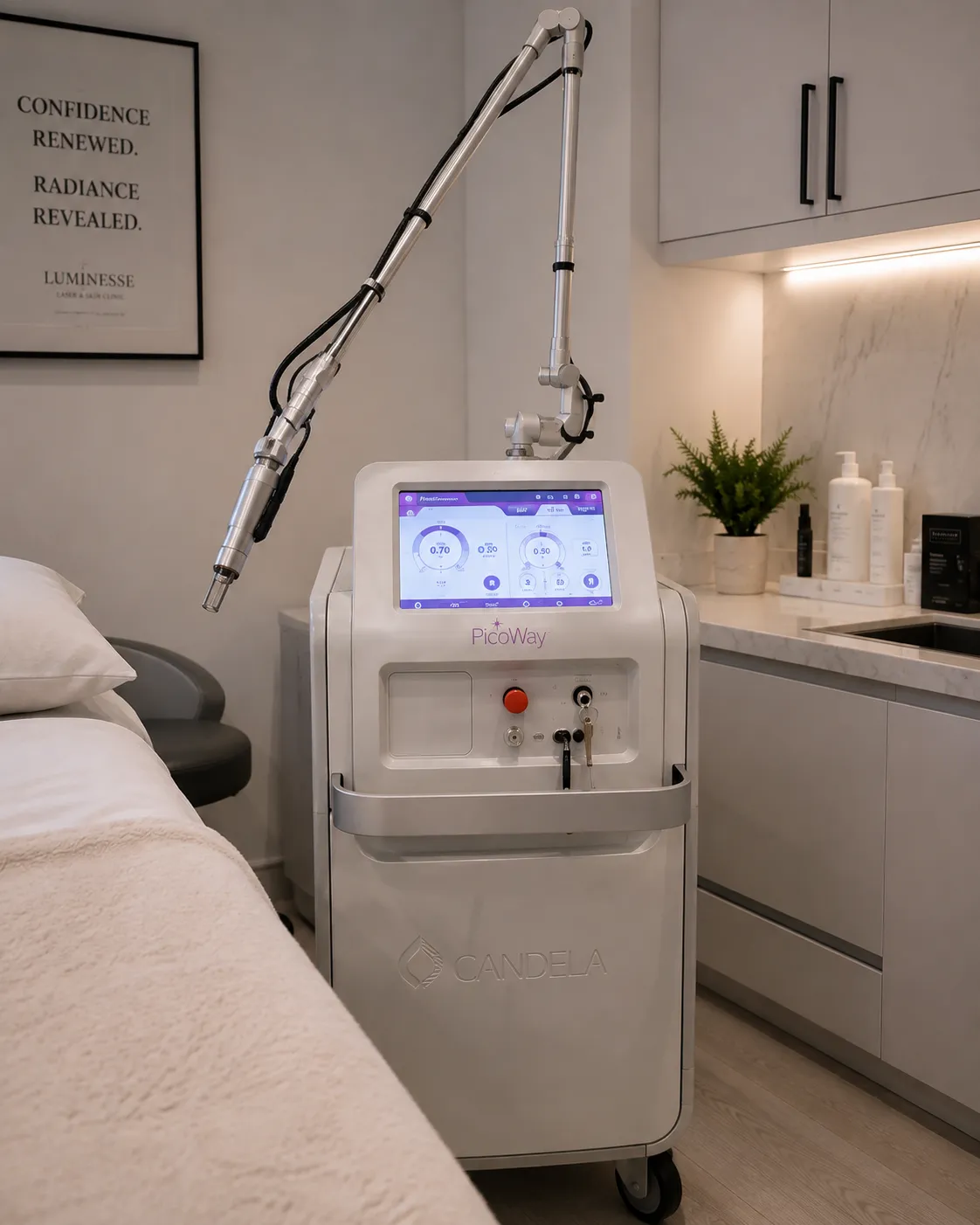
Picosecond laser pulses fragmenting tattoo ink particles
How does picosecond technology break up ink?
Picosecond lasers deliver energy in trillionths of a second. The PicoWay system creates a photoacoustic effect that shatters ink and pigment more precisely than older nanosecond technology. This precision matters because the mechanism differs fundamentally from heat-based approaches.
What is the photoacoustic effect?
The photoacoustic effect converts laser light into mechanical pressure. Ultra-short pulses strike the ink particles before surrounding tissue absorbs significant heat. The ink fractures into smaller fragments rather than burning away. This mechanical action explains why picosecond laser tattoo removal treats difficult ink colors effectively.
How does the body clear the broken ink?
Laser energy targets the tattoo ink directly. The pulses break the ink down into smaller particles. The body’s natural processes then eliminate these particles. This elimination produces visible lightening of the tattoo ink over successive sessions.
Why does pulse duration matter?
Nanosecond lasers rely on heat to destroy ink. That heat increases the risk of scarring, textural changes, and post-inflammatory pigmentation, particularly on darker skin tones. Picosecond technology avoids this thermal burden by working faster than the tissue’s heat conduction rate.
The PicoWay approach works from the inside out. Ink particles absorb the ultra-short pulse energy. The resulting pressure wave fragments the pigment mechanically. Luminesse Laser is committed to delivering safe and personalized experiences with certified and experienced practitioners, leveraging advanced laser techniques for optimal results. The body then clears the smaller particles through its lymphatic system. Each session lightens the tattoo further as more ink fragments leave the treatment area.
Which ink colors can PicoWay actually remove?
PicoWay successfully removes difficult ink colors as well as previously treated tattoos. The picosecond laser technology targets reds, blues, greens, and black with equal effectiveness.
Traditional nanosecond lasers rely on heat to break down ink particles. That thermal approach struggles with certain pigments, especially vibrant blues and stubborn greens. PicoWay delivers energy in trillionths of a second instead. The photoacoustic effect shatters ink mechanically rather than burning it. This mechanism explains why picoway laser tattoo removal handles the full color spectrum where older systems fall short.
Why do some ink colors resist older lasers?
Older lasers depend on specific wavelengths that certain pigments absorb poorly. Green and blue inks often survive multiple sessions with nanosecond devices. PicoWay’s ultra-short pulse durations create a different physical response. The ink particles fracture into smaller fragments regardless of color chemistry. The body then clears those fragments through natural processes.
Does PicoWay work on previously treated tattoos?
Yes. PicoWay erases unwanted ink more effectively than earlier technologies, including tattoos that resisted prior removal attempts. Clients who underwent unsuccessful sessions elsewhere often see progress with PicoWay. The system’s precision power addresses residual pigment that thermal lasers left behind.
Luminesse Laser & Skin Clinic offers customized treatment plans targeting specific ink colors and skin concerns. Certified practitioners assess each tattoo’s pigment composition before recommending a protocol. The clinic’s commitment to safe, personalized experiences ensures clients receive appropriate settings for their unique ink profile. Luminesse Laser delivers safe, effective, and personalized treatments for every skin type. That versatility matters for [tattoo removal ottawa](https://luminesselaser.ca/tattoo-removal-services-ottawa-a3-picoway-laser-tattoo-removal/) clients with diverse skin tones. Picosecond laser tattoo removal achieves results without the scarring risk associated with heat-based methods. Tattoo removal cost ottawa varies by ink color, tattoo size, and session count.
Is PicoWay safe for all skin types?
PicoWay technology is FDA-cleared for tattoo removal across all Fitzpatrick skin types, from I through VI. This clearance marks a significant advance in treatment safety for a broad spectrum of clients. Many older laser systems struggle with darker skin tones, often increasing the risk of burns or pigmentation changes.
The key lies in how the device delivers energy. A picosecond laser tattoo removal system like PicoWay works through a primarily photoacoustic effect. Energy pulses measured in trillionths of a second shatter ink particles mechanically, rather than relying on prolonged heat. Traditional nanosecond lasers heat the skin surrounding the tattoo, which elevates the danger of scarring, textural changes, and post-inflammatory hyperpigmentation. PicoWay’s subsurface remodeling approach avoids that thermal buildup, making it a safer option for treating pigment in melanin-rich skin.
How does skin type affect laser tattoo removal safety?
Skin type directly influences how much energy a laser can safely deliver. Higher Fitzpatrick types contain more melanin, which competes with tattoo ink as a target for the laser. PicoWay’s ultra-short pulses resolve this conflict. The photoacoustic disruption happens so fast that surrounding melanin absorbs minimal stray energy, preserving the skin’s natural tone and texture.
Why is the picosecond difference important for darker skin?
The speed of energy delivery changes the entire risk profile. Heat-based lasers apply energy long enough to damage adjacent tissue, which leaves clients with darker complexions vulnerable to hypopigmentation or hypertrophic scarring. PicoWay’s mechanical impact, by contrast, confines the effect to the ink itself. Luminesse Laser & Skin Clinic combines this advanced technology with professional expertise, delivering safe and personalized treatments for every skin type. Comprehensive care demands both powerful tools and experienced practitioners who understand the nuances of darker Fitzpatrick types.
How many sessions will you need?
No single number answers that question for every client. The total sessions required depends on a cluster of biological and technical variables that a professional evaluates during consultation. Tattoo removal is a gradual biological process, not an instant erasure.
What factors determine the number of treatments?
Several variables shape the treatment timeline. Ink type and color sit at the top of that list. Professional pigments, dense black outlines, and certain colors like green and blue resist breakdown more stubbornly than amateur black ink. Tattoo size and age matter as well. Larger designs demand more passes, while older tattoos have often already faded from years of immune activity. Location on the body introduces another variable. Ink deposited on extremities, where circulation is slower, clears less efficiently than ink on the torso or upper arms. Lifestyle habits, including smoking and sun exposure, slow the body’s lymphatic clearance and extend the process. The type of laser used is equally critical. A picosecond laser tattoo removal system like the PicoWay delivers energy in trillionths of a second, creating a photoacoustic effect that shatters ink into finer particles than older heat-based nanosecond lasers. Finer particles mean faster clearance and fewer sessions.
Does the laser technology change the session count?
Technology shifts the math considerably. The PicoWay system achieves clearance with fewer treatments than older lasers while producing better final results. Its ultra-short pulses spare surrounding skin from thermal damage, which reduces the mandatory healing interval between sessions and lowers the risk of scarring. For clients pursuing tattoo removal Ottawa clinics offer, this translates to a shorter overall timeline. A laser tattoo removal guide worth following always emphasizes that the device matters as much as the practitioner.
How is a realistic treatment plan established?
A realistic plan starts with an in-person evaluation. During a consultation at Luminesse Laser & Skin Clinic, the tattoo is assessed across all relevant variables. The practitioner then provides a customized treatment regime with an estimated session range. Customized treatment plans target specific concerns rather than applying a generic protocol. This approach prevents the disappointment of unrealistic expectations. Clients leave knowing what their skin can achieve and roughly how long the journey will take. The [tattoo removal cost Ottawa](https://luminesselaser.ca/laser-hair-removal-cost-guide-ottawa-a2-laser-hair-removal-cost/) residents encounter reflects this individualized planning, as pricing structures align with the number of predicted sessions.
What should you do before your appointment?
Proper preparation protects treatment results and reduces the risk of complications. Clients who follow pre-care instructions consistently achieve better outcomes from picoway laser tattoo removal sessions.
Sun exposure ranks among the most common preparation mistakes. Clients must avoid tanning, sun exposure, spray tans, and self-tanners for at least 2 weeks before treatment. Tanned or sunburned skin absorbs laser energy differently, which increases the chance of adverse reactions.
Why does clean skin matter before laser treatment?
The treatment area must be completely clean on appointment day. Clients should arrive with clean brows free of makeup, sunscreen, lotions, oils, or brow products. Product residue interferes with laser penetration and can trap heat against the skin.
What treatments should be paused beforehand?
Certain cosmetic procedures must stop at least 2 weeks before a picosecond laser tattoo removal appointment. Clients should avoid chemical peels, microneedling, aggressive facials, and laser treatments in the treatment area during this window. These procedures leave skin sensitive and compromise its ability to tolerate laser energy safely.
Medical history disclosure plays a critical role in safe treatment planning. Clients should inform their provider of any recent cosmetic procedures, medications, skin conditions, or history of pigmentation changes. This information allows practitioners to adjust settings and anticipate how the skin will respond.
A laser tattoo removal guide typically emphasizes these preparation steps because they directly influence both safety and the number of sessions required. Skipping pre-care instructions can delay progress and extend the overall treatment timeline.
What does aftercare look like post-treatment?
Aftercare following picoway laser tattoo removal determines how quickly skin heals and how completely ink fades. Luminesse Laser & Skin Clinic provides personalized home care recommendations to maintain results after each session. Skipping these steps slows progress and risks irritation that could extend the treatment timeline.
The treated area needs consistent protection and gentle handling. Clients receive specific instructions based on their skin type and the tattoo’s location. A clean, covered area heals faster than one exposed to friction or sun.
How should clients care for the treated area in the first 48 hours?
The first two days matter most. Clients keep the area clean and avoid touching it with unwashed hands. Cool compresses reduce swelling without rubbing the skin. Tight clothing over the treated area causes friction that delays healing.
What daily habits support better fading between sessions?
Sun exposure ranks among the biggest threats to results. Clients protect treated skin with covering or sunscreen once healing allows. Moisturizing keeps the area supple and reduces scabbing. PicoWay technology produces less discomfort during treatment compared to other lasers, but the skin still needs recovery time afterward.
Luminesse Laser maintains a welcoming environment guided by safe practices and COVID-19 protocols. Every follow-up visit follows the same hygiene standards. The clinic’s mission is to help clients achieve their aesthetic goals through effective, innovative treatments, and aftercare forms part of that commitment.
A laser tattoo removal guide typically emphasizes three aftercare pillars:
- Keep the area clean and dry for the first day
- Avoid sun, heat, and sweating for at least 48 hours
- Apply recommended products only, never random creams
Clients who follow these steps see steadier fading across sessions. Those who skip aftercare often need additional treatments to reach the same result.
How much does tattoo removal cost in Ottawa?
Tattoo removal cost Ottawa pricing depends on several treatment variables rather than a single flat rate. Luminesse Laser & Skin Clinic offers expert laser treatments and professional services in Ottawa, Ontario. The clinic provides a private and professional setting for every session.
The number of laser treatments required directly affects overall cost. Variables include ink type, tattoo size, location on the body, type of laser used, and lifestyle habits. A small black-ink tattoo on the upper arm typically requires fewer sessions than a large multicolored piece on the ankle.
What factors influence the total price?
- Ink type: Professional inks and certain colors demand more sessions
- Tattoo size: Larger designs require longer treatment time per session
- Body location: Areas with less circulation clear ink more slowly
- Laser technology: Picosecond systems often reduce total session counts
- Lifestyle habits: Smoking and sun exposure slow the body’s ink clearance
How many sessions will a tattoo need?
Session counts vary by individual. The number of laser treatments depends on ink type, tattoo size, and body location. Luminesse Laser is committed to delivering safe and personalized experiences with certified and experienced practitioners. A consultation establishes realistic expectations for each client’s specific tattoo.
Does insurance cover tattoo removal?
Tattoo removal is considered a cosmetic procedure. Standard health insurance plans do not cover the cost. Clients pay per session or through package pricing determined after an initial assessment.
Conclusion
Tattoo removal is a process, not a single event, and the path forward begins with a consultation that maps your specific ink, skin, and goals. Preparation and aftercare are not optional extras, they are the difference between steady fading and stalled progress. With a realistic session estimate and a clear understanding of the variables that shape your timeline, you can make an informed decision and start the journey toward clear skin with confidence.
Frequently Asked Questions
How many sessions does PicoWay laser tattoo removal usually take?
There’s no universal number. Session count depends on ink type and color, tattoo size and age, its location on the body, and lifestyle factors like smoking or sun exposure. A consultation at Luminesse Laser & Skin Clinic establishes a realistic range based on your specific tattoo.
Is PicoWay safe for darker skin tones?
Yes. PicoWay is FDA-cleared for all Fitzpatrick skin types, from I through VI. Its picosecond pulses shatter ink mechanically rather than relying on prolonged heat, which lowers the risk of burns, scarring, and pigmentation changes that older nanosecond lasers can cause in melanin-rich skin.
Which tattoo ink colors can PicoWay remove?
PicoWay effectively treats black, red, blue, and green ink, including stubborn colors and previously treated tattoos that resisted other lasers. Its photoacoustic effect fragments pigment regardless of color chemistry, something older heat-based systems often struggle to achieve.
How much does tattoo removal cost in Ottawa?
Tattoo removal cost in Ottawa varies based on ink type, tattoo size, body location, laser technology used, and lifestyle habits that affect clearance speed. Luminesse Laser & Skin Clinic determines pricing after an initial assessment, since insurance does not cover this cosmetic procedure.
What should I do to prepare for a PicoWay treatment?
Avoid tanning, sun exposure, spray tans, and self-tanners for at least 2 weeks before your appointment, and pause chemical peels, microneedling, or aggressive facials in the treatment area during that same window. Arrive with clean skin free of makeup, lotions, or oils.
PicoWay Microblading and Cosmetic Brow Tattoo Removal in Ottawa & Nepean
Luminesse Laser & Skin Clinic in Nepean/Ottawa exclusively offers removal services for microblading and cosmetic brow tattoos. It is important to note that the clinic does NOT provide permanent makeup or microblading application services. Their expertise lies solely in the precise and effective removal of unwanted cosmetic pigment.
Precision Picosecond Photoacoustic Targeting for Brow Pigments
The PicoWay system uses advanced picosecond laser technology that targets cosmetic brow pigments with surgical precision via a photoacoustic effect. This mechanism shatters pigment particles without relying on heat, thereby avoiding singeing, bleaching, or any damage to the delicate natural eyebrow hair follicles. This ensures that clients can achieve pigment clearance while preserving their natural brow hairs and overall skin integrity.
Understanding Ink Oxidation and Temporary Color Shifts
During the removal process, cosmetic pigments such as iron oxide or titanium dioxide may undergo oxidation. This chemical transformation can result in temporary and progressive color shifts through stages of red, orange, or yellow hues before eventual fading. PicoWay’s specialized wavelengths are designed to effectively target these oxidized pigment stages, facilitating a smoother and more predictable clearance cycle for cosmetic brow tattoos and microblading.
Expected Session Counts, Downtime, and Safety
Typically, clients can expect between 2 to 4 PicoWay sessions for cosmetic microblading or brow tattoo removal, which is fewer than the 6+ sessions often required for larger body tattoos. Downtime following each session is minimal, with standard post-treatment redness and slight swelling subsiding within a few days. PicoWay treatments are safe across all skin types, with tailored settings to optimize results and minimize adverse effects.
Post-Treatment Aftercare for Optimal Recovery
Aftercare is crucial to ensure effective healing and pigment clearance post-treatment. Clients should keep the treated brow area clean and dry for the first 24 hours, avoid sun exposure and heat for at least 48 hours, and refrain from applying any cosmetics or skincare products to the area unless specifically recommended by the practitioner. The clinic provides personalized home care instructions to support optimal recovery and enhance the removal outcome.
