
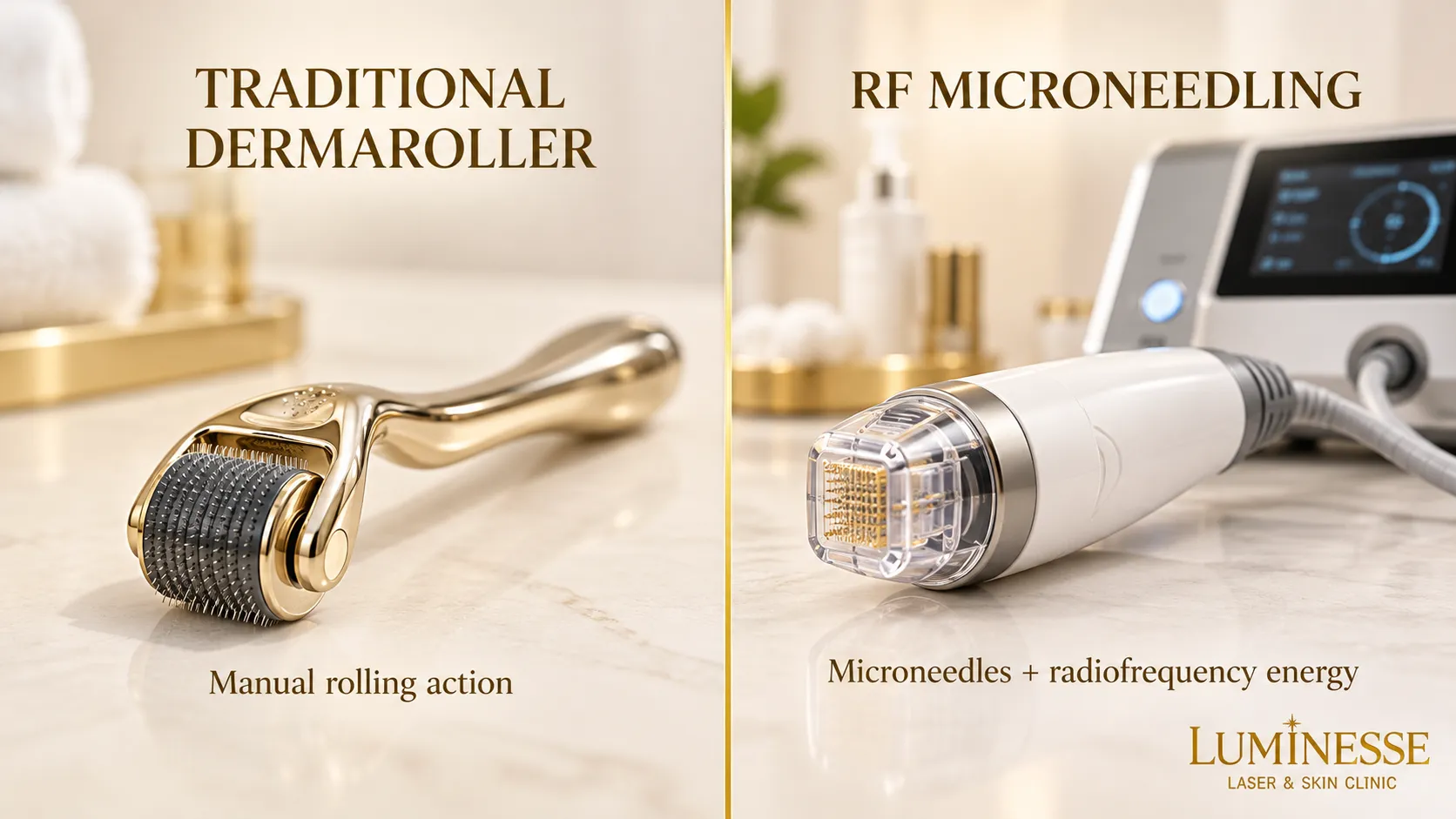
Radiofrequency microneedling combines radiowave tissue heating with collagen-inducing microneedling to correct skin concerns such as lines, texture, and sun damage. Luminesse Laser & Skin Clinic offers Secret RF at its Nepean / Ottawa clinic, stimulating collagen for firmer, smoother skin with minimal sessions and less risk of scarring than laser resurfacing.
Key Takeaways
- RF microneedling combines mechanical micro-injury with radiofrequency heat, producing deeper collagen stimulation than traditional microneedling alone.
- RF microneedling delivers more dramatic skin tightening because radiofrequency heat contracts existing collagen fibers immediately while triggering long-term remodeling.
- A single RF microneedling session can address fine lines, acne scars, enlarged pores, and sun damage at once.
- RF microneedling is generally safer than traditional microneedling for darker skin tones (Fitzpatrick IV-VI), since it relies on controlled heat rather than melanin-sensitive mechanical injury.
- Downtime is minimal: most clients see mild redness and swelling resolve within 24 to 48 hours.
- Visible results begin within the first week, with full collagen-driven improvement developing over three to six months.
- Luminesse Laser & Skin Clinic offers Secret RF microneedling at its Nepean/Ottawa clinic, with treatment plans customized to each client’s skin type and concerns.
What Is Microneedling and How Does It Work?
Microneedling is a skin rejuvenation treatment that creates controlled micro-injuries in the skin. These tiny punctures trigger the body’s natural healing response. The process stimulates fresh collagen and elastin production. The result is firmer, smoother skin with improved texture over time.
A specialized device with fine needles makes thousands of microscopic channels across the treatment area. This controlled damage signals the skin to repair itself. New tissue forms. The skin grows stronger and more resilient. Collagen induction therapy, as the mechanism is often called, addresses multiple concerns simultaneously. Lines soften. Sun damage fades. Overall texture becomes more uniform.
How Does Microneedling Improve Skin Texture and Tone?
The micro-injuries from microneedling prompt fibroblasts to produce new structural proteins. Collagen and elastin fibers rebuild the skin’s support network from within. This remodeling process smooths surface irregularities and reduces the appearance of fine lines. The skin’s tone evens out as fresh, healthy cells replace damaged ones.
What Skin Concerns Does Microneedling Address?
Microneedling targets lines, texture irregularities, and sun damage. The treatment also proves effective for acne scar reduction by breaking down scar tissue and encouraging new collagen formation. Pitted scars fill in gradually. The skin’s surface becomes more level and refined. Luminesse Laser & Skin Clinic offers microneedling as part of its skin rejuvenation and anti-aging services in Ottawa, Ontario. The clinic designs each session to improve specific concerns while stimulating long-term collagen renewal.
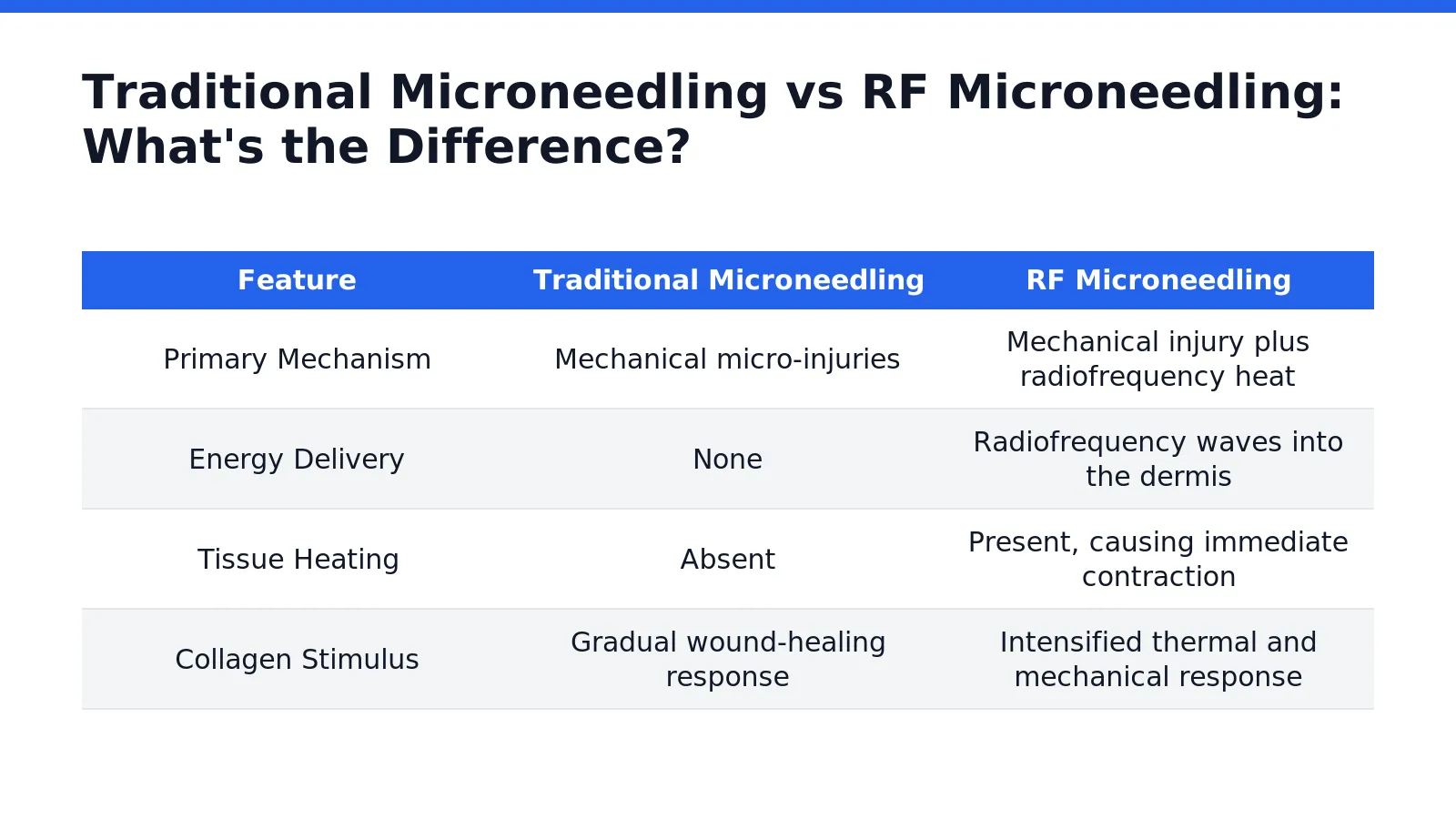
Traditional Microneedling vs RF Microneedling: What’s the Difference?
Traditional microneedling and radiofrequency (RF) microneedling both stimulate the skin’s repair process. The critical distinction lies in the energy source used to trigger that renewal. Standard traditional microneedling vs RF microneedling treatments share a common starting point. Both use fine needles to create controlled micro-channels in the skin. The divergence happens immediately after that physical contact.
Traditional microneedling relies purely on mechanical micro-injuries. The tiny punctures trigger the body’s wound-healing cascade. This process boosts collagen induction and elastin production naturally. RF microneedling builds on this foundation by adding a second, powerful element. The technique combines the tissue-heating effect of radio waves with the collagen-inducing ability of microneedling. Once the needles reach the dermis, they emit radiofrequency energy. This energy heats the deeper layers of skin. The thermal effect causes immediate tissue contraction and a more intense regenerative response.
How Does the Depth of Treatment Compare?
Traditional devices create surface-level channels that primarily affect the epidermis and upper dermis. RF microneedling delivers energy past the needle tip into the deeper dermis. This dual action produces more significant remodeling without additional surface damage. The result is a treatment that addresses laxity and texture simultaneously.
Which Option Offers More Dramatic Tightening?
RF microneedling provides superior skin tightening. The heat from radiofrequency energy denatures collagen fibers instantly. The body then replaces them with new, organized collagen bundles. Traditional microneedling tightens skin gradually through collagen induction alone. It lacks the immediate thermal contraction that RF energy provides. This difference makes RF microneedling a popular alternative to laser skin resurfacing for many clients.
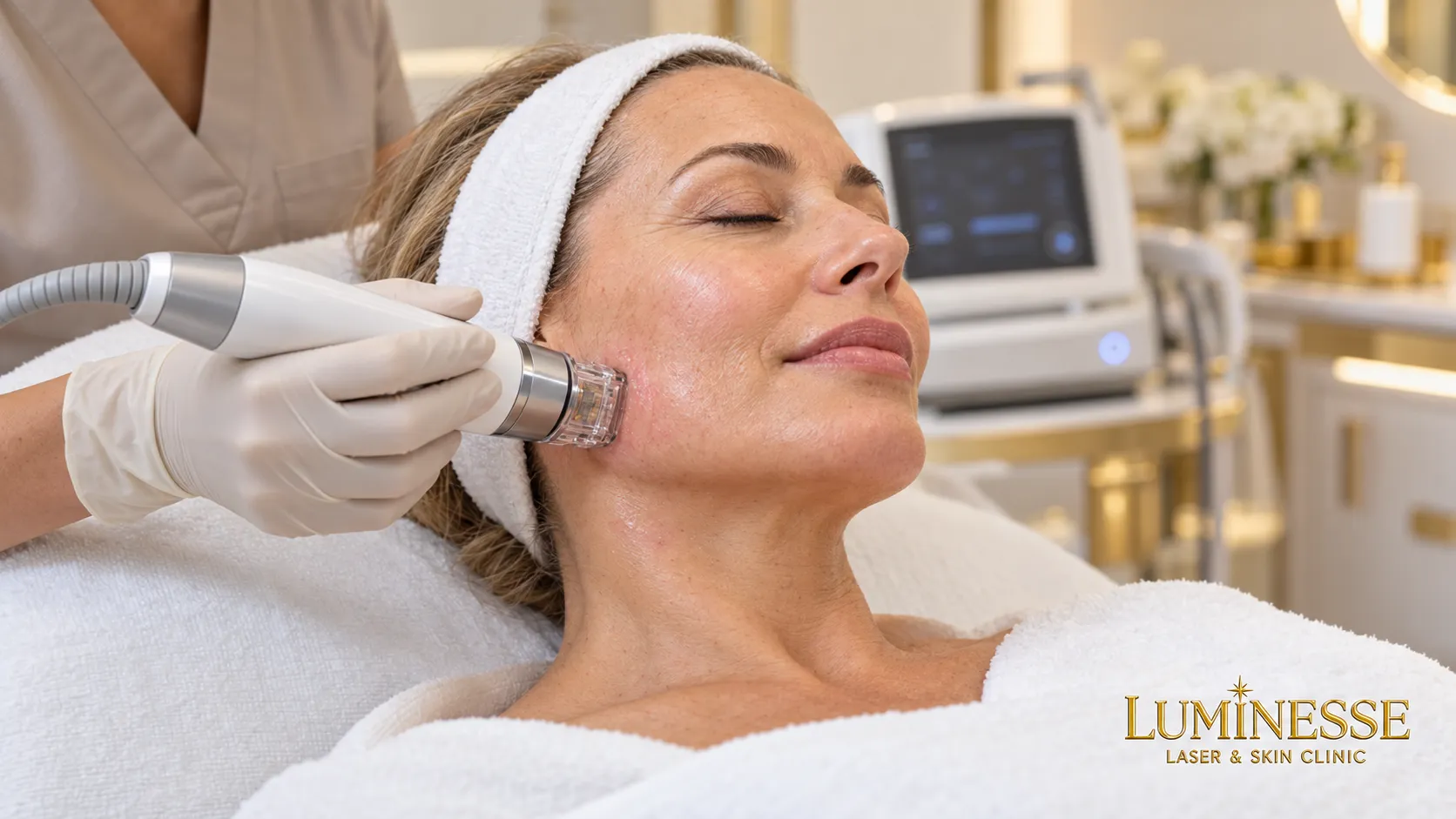
Luminesse Laser & Skin Clinic incorporates both modalities into customized treatment plans. A specialist assesses skin laxity, scarring, and texture to determine the appropriate approach. For clients prioritizing acne scar reduction, RF microneedling often remodels deep, tethered scars more effectively. The added thermal energy breaks down fibrotic tissue that traditional methods may not reach. Safety profiles remain high for both procedures when performed by certified practitioners. Downtime varies, with traditional microneedling typically resolving faster due to the absence of thermal injury.
Ready to Discuss RF Microneedling for Your Skin?
Luminesse Laser & Skin Clinic’s certified practitioners can assess your skin type and concerns to recommend the right approach, whether that’s RF microneedling or traditional microneedling. Book your free consultation or call (613) 727-0714 to speak with the team.
What Skin Concerns Can RF Microneedling Address?
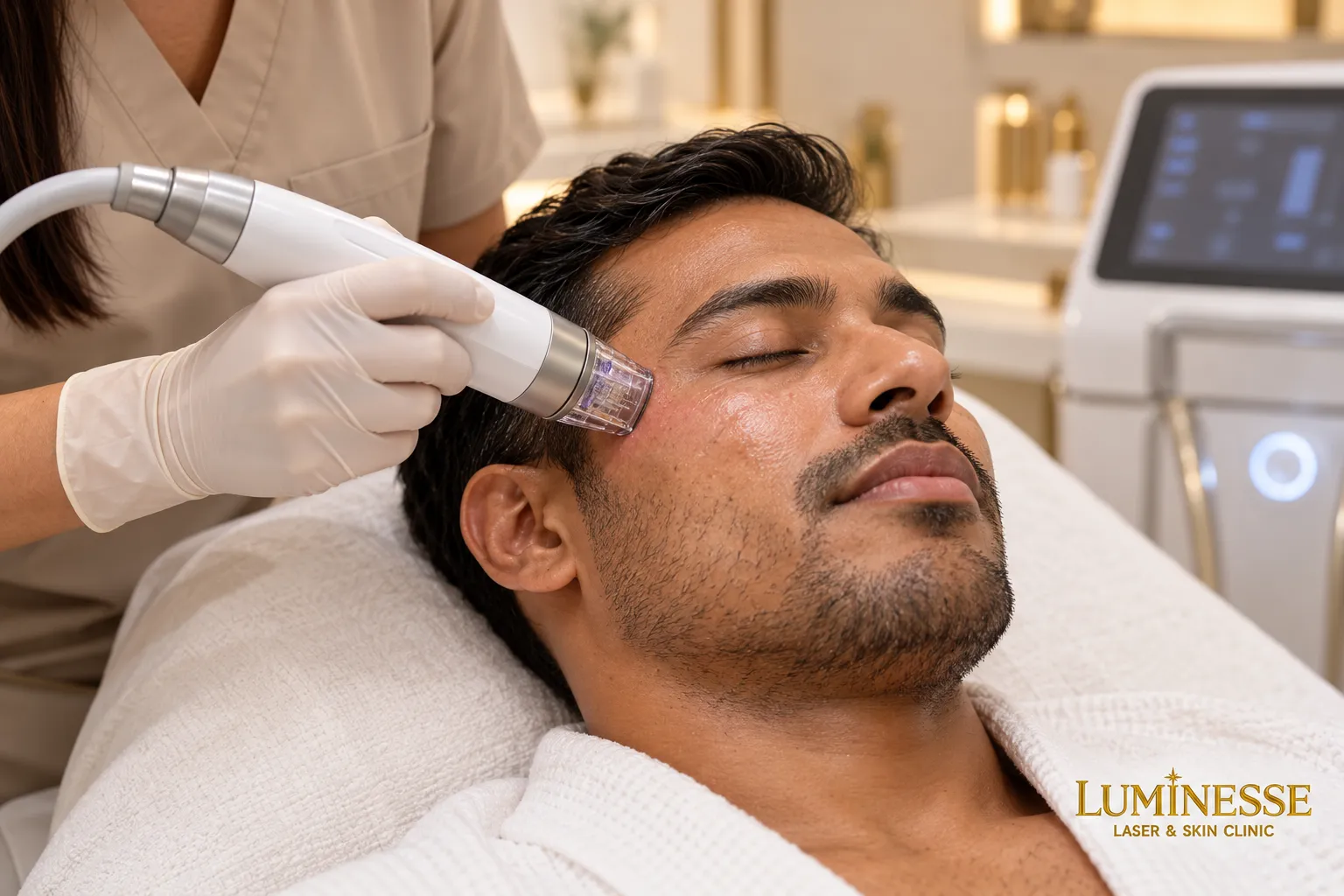
RF microneedling addresses multiple skin concerns in a single treatment protocol. The procedure simultaneously targets fine lines, wrinkles, acne scars, enlarged pores, and sun damage while tightening lax skin. Clients who delay treatment often watch these concerns deepen, losing the opportunity for more dramatic correction with fewer sessions.
The technology works through dual-action collagen induction. Microneedles create controlled micro-injuries that trigger the body’s natural repair response. Radiofrequency energy then heats the deeper dermal layers, amplifying collagen and elastin production far beyond what needles alone achieve. This combination tightens and firms the skin from within.
How does RF microneedling improve acne scars?
Acne scar reduction occurs as new collagen remodels depressed scar tissue. The radiofrequency energy reaches depths that surface treatments cannot, restructuring the skin’s architecture over a series of sessions. Boxcar scars, rolling scars, and icepick scars all respond to this approach. The result is smoother, more even skin texture without the extended recovery of ablative lasers.
What makes RF microneedling different for skin tightening?
Skin laxity improves because the heat contracts existing collagen fibers immediately while stimulating long-term remodeling. Radiofrequency microneedling has become one of the most effective and popular treatments for tightening and rejuvenating the skin, offering minimal downtime and noticeable results. Luminesse Laser & Skin Clinic incorporates this technology into comprehensive rejuvenation plans that improve lines, texture, and sun damage. The clinic provides care across a range of skin types and concerns, tailoring energy levels and needle depths to each individual’s needs.
Large pores shrink as collagen density increases around the pore walls. Sun damage fades through cellular turnover accelerated by the healing cascade. Fine lines soften, and deeper wrinkles become less pronounced. These improvements accumulate over three to six months as the skin continues producing new collagen. Without intervention, collagen loss progresses steadily after age 25, making each untreated year a compounding loss of structural support.
What Should You Expect During and After Treatment?

A typical session begins with cleansing and a topical numbing agent. The handheld device then creates microscopic channels while delivering controlled radiofrequency energy beneath the skin’s surface. Most clients describe the sensation as mild warmth with light pressure. A full-face treatment generally takes 30 to 45 minutes.
Downtime remains minimal compared to more aggressive resurfacing procedures. The procedure delivers transformative skin rejuvenation results without extensive downtime. Mild redness and slight swelling mimic a sunburn and fade within 24 to 48 hours. Tiny micro-crusts may form as the skin heals, flaking away naturally after a few days.
How Soon Do Results Appear?
Initial skin tightening and glow become visible within the first week. The deeper collagen induction process unfolds over the following three to six months. New collagen and elastin fibers rebuild gradually, improving firmness and texture with each passing month.
What Safety Protocols Are in Place?
Safety remains the foundation of every treatment at Luminesse Laser & Skin Clinic. Certified and experienced practitioners deliver personalized experiences using advanced laser techniques. The clinic provides a welcoming environment guided by safe practices and COVID-19 protocols. RF microneedling is known for its low downtime and impressive results when performed under strict clinical standards.
Post-treatment care focuses on gentle cleansing, broad-spectrum sunscreen, and avoiding active ingredients for several days. Clients receive clear aftercare instructions to protect the healing skin and maximize long-term outcomes.
Is Microneedling Safe for Your Skin Type?
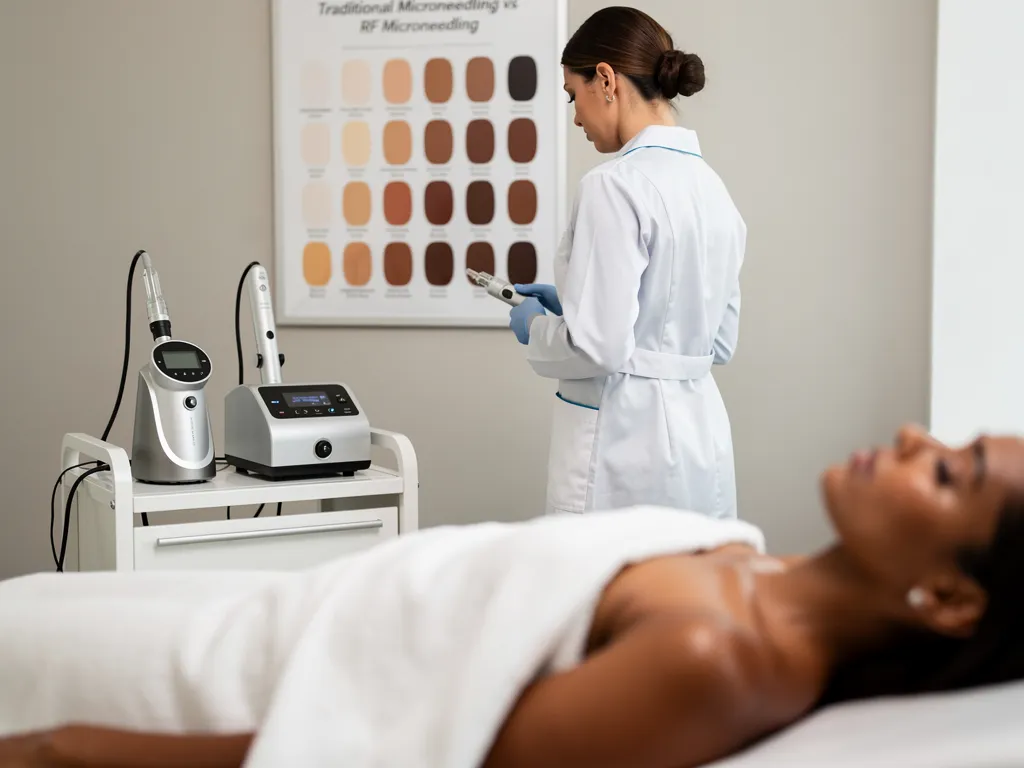
Microneedling safety depends on skin type, device selection, and practitioner expertise. Radiofrequency microneedling is a dermatologic procedure that effectively corrects various skin problems across a broad range of skin tones. Traditional methods carry higher risk for darker complexions. RF technology changes that equation.
How does skin type affect microneedling safety?
Darker skin tones face a greater risk of post-inflammatory hyperpigmentation from traditional microneedling than from RF microneedling. Mechanical injury alone triggers unpredictable melanocyte responses. RF energy delivers controlled thermal coagulation without relying on melanin absorption. This mechanism dramatically improves the safety profile for Fitzpatrick types IV through VI. Patients avoid the dyspigmentation that often follows laser or aggressive mechanical treatments.
What makes RF microneedling safer than traditional methods?
The distinction lies in energy delivery. Standard microneedling creates micro-channels for collagen induction through physical wounding. RF microneedling adds precise heat beneath the epidermis. Luminesse Laser & Skin Clinic combines professional expertise with advanced technology to deliver safe, effective, and personalized treatments for every skin type. The clinic uses technologies like the GentleMax Pro and PicoWay® to ensure high effectiveness with minimal sessions and less risk of scarring. Epidermal preservation remains intact while dermal remodeling accelerates.
Downtime varies by treatment intensity. Most clients experience 24 to 48 hours of mild redness. RF microneedling typically produces less surface disruption than ablative lasers. Luminesse Laser & Skin Clinic’s mission centers on helping clients achieve their aesthetic goals through effective, innovative treatments. Proper pre-treatment assessment eliminates contraindications. Active infections, recent isotretinoin use, and keloid scarring history require careful screening before any microneedling procedure.
Conclusion

RF microneedling delivers measurable improvement across multiple concerns through a single treatment pathway. The decision to begin this process determines whether collagen loss continues compounding or structural support rebuilds beneath the surface. Certified practitioners tailor energy levels and needle depths to individual skin needs, making the procedure accessible across diverse skin types. The next step involves scheduling a consultation to determine whether this approach aligns with your specific aesthetic goals.
Frequently Asked Questions
What is the difference between traditional microneedling and RF microneedling?
Traditional microneedling relies solely on mechanical micro-injuries from fine needles to trigger collagen induction. RF microneedling adds radiofrequency energy delivered through the needles into the deeper dermis, heating tissue and causing immediate contraction alongside the mechanical healing response, which produces more significant tightening and remodeling.
Is RF microneedling effective for acne scars?
Yes. RF microneedling reaches deeper than surface treatments, restructuring the skin’s architecture to remodel boxcar, rolling, and icepick scars over a series of sessions, often with better results on deep, tethered scars than traditional microneedling alone.
How much downtime does RF microneedling require?
Downtime is minimal. Most clients experience mild redness and slight swelling, similar to a sunburn, that fades within 24 to 48 hours. Tiny micro-crusts may form and flake away naturally over the following days.
Is RF microneedling safe for darker skin tones?
Yes. RF microneedling uses controlled thermal energy rather than relying on melanin absorption, which significantly lowers the risk of post-inflammatory hyperpigmentation compared to traditional microneedling, making it a safer option for Fitzpatrick skin types IV through VI.
How soon will I see results from RF microneedling, and how long do they take to fully develop?
Initial tightening and glow are visible within the first week. The deeper collagen induction process continues over the following three to six months as new collagen and elastin fibers rebuild, gradually improving firmness and texture.
Where can I get Secret RF microneedling treatments?
Luminesse Laser & Skin Clinic offers Secret RF microneedling at its Nepean / Ottawa clinic, with certified practitioners tailoring energy levels and needle depths to each client’s skin type and concerns.
Schedule Your Free Consultation Today
Take the next step toward firmer, smoother skin. Book your free consultation with Luminesse Laser & Skin Clinic, or call (613) 727-0714 to learn which treatment plan fits your skin type and goals.
