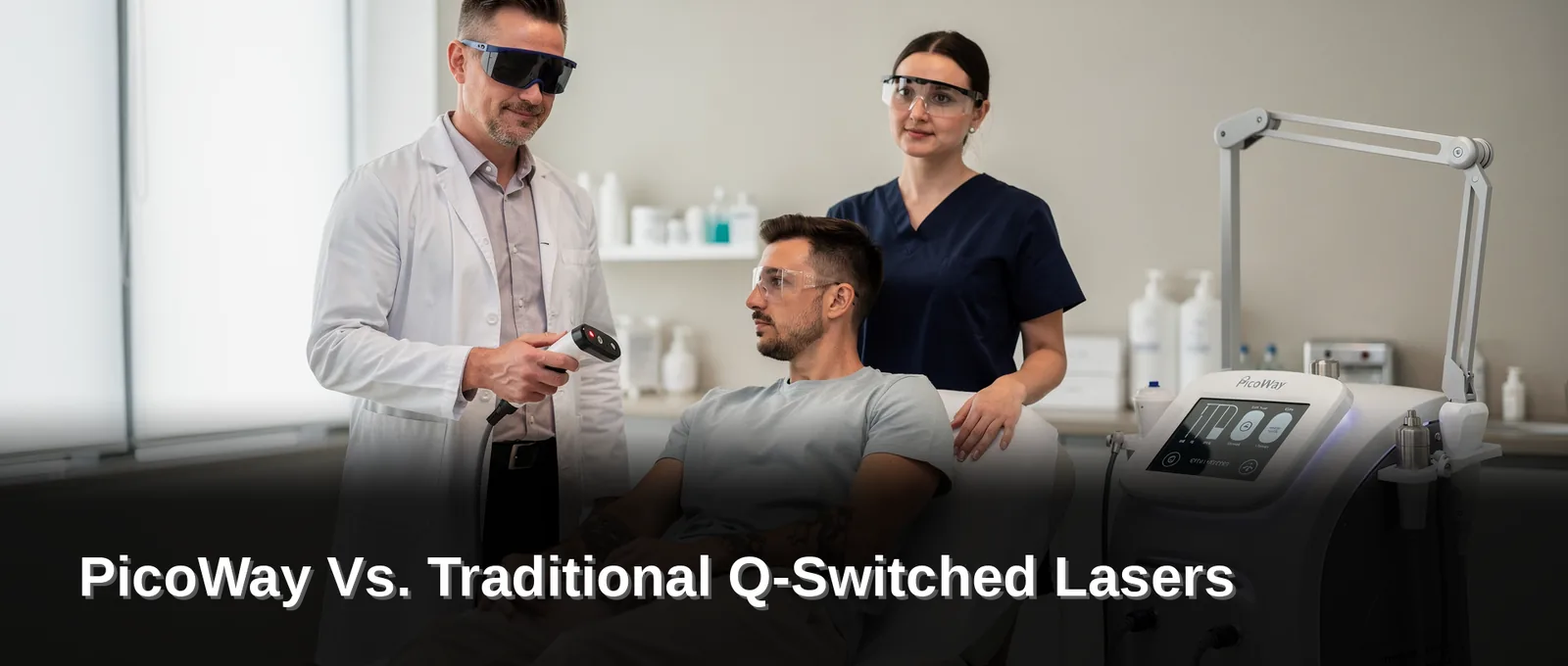
PicoWay picosecond technology shatters tattoo ink with ultra-short pulses measured in trillionths of a second, while traditional Q-switched lasers use slower nanosecond pulses that rely on heat. The Candela PicoWay® platform at Luminesse Laser & Skin Clinic delivers four wavelengths (532 nm, 730 nm, 785 nm, 1064 nm) for faster clearance in fewer sessions with less thermal skin damage.
Introduction: The Evolution of Laser Tattoo Removal
Laser tattoo removal has undergone a fundamental technological shift. The field has moved from thermal destruction to precise photoacoustic fragmentation. Early systems relied on heat to burn ink particles. Modern platforms now shatter ink mechanically, leaving surrounding skin unharmed.
Traditional picoway vs q switched laser comparisons highlight this generational leap. A Q-switched laser is an older nanosecond device that relies more on heat, according to Laser Eraser. These systems deliver pulses measured in billionths of a second. The thermal approach often required more sessions and carried a higher risk of scarring or pigmentation changes.
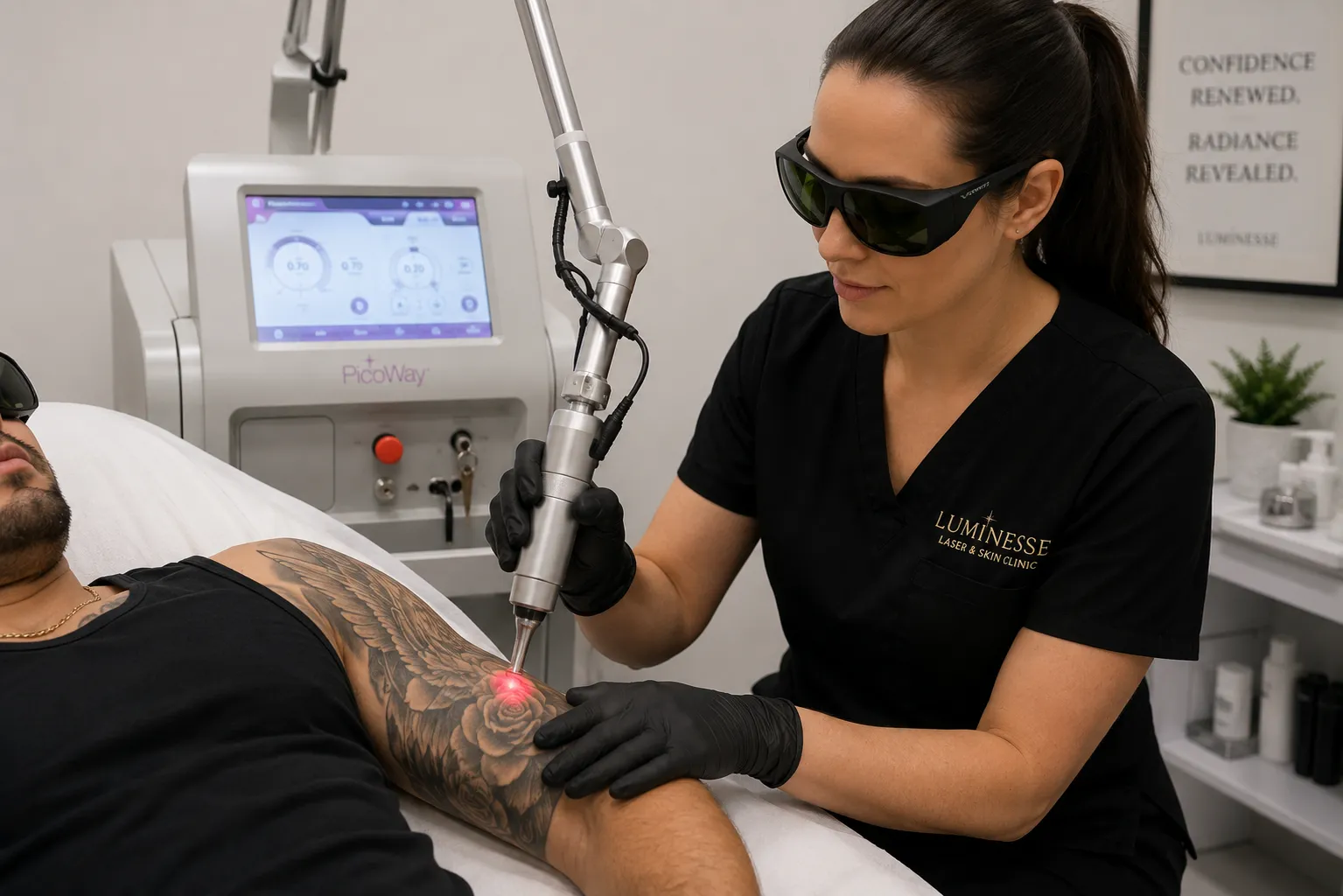
The Candela PicoWay® platform represents the picosecond vs nanosecond tattoo removal breakthrough. This system employs pure photoacoustic shockwaves. Mechanical energy shatters ink particles into microscopic dust-like fragments without thermal damage to surrounding tissue. Pulse durations measured in trillionths of a second create this effect. The result is the fastest laser tattoo removal technology available in clinical settings.
How does a pico laser differ from a traditional laser?
The pico laser vs traditional laser tattoo distinction centers on energy delivery. Traditional nanosecond lasers heat ink until it fractures. Picosecond lasers create a photoacoustic effect that physically shatters ink. This mechanical action clears ink faster and treats stubborn colors that thermal lasers often miss.
What makes the Candela PicoWay platform different?
The Candela PicoWay Ottawa platform delivers multiple wavelengths through a single device. This versatility allows clinicians to target diverse ink colors across all skin types. The picoway tattoo removal benefits include fewer treatment sessions, reduced discomfort, and safer outcomes for darker skin tones where thermal lasers pose greater risk.
The Candela PicoWay platform also has a fractional handpiece for PicoWay Resolve skin rejuvenation in Ottawa.
Picoseconds vs. Nanoseconds: Pulse Duration Physics Explained
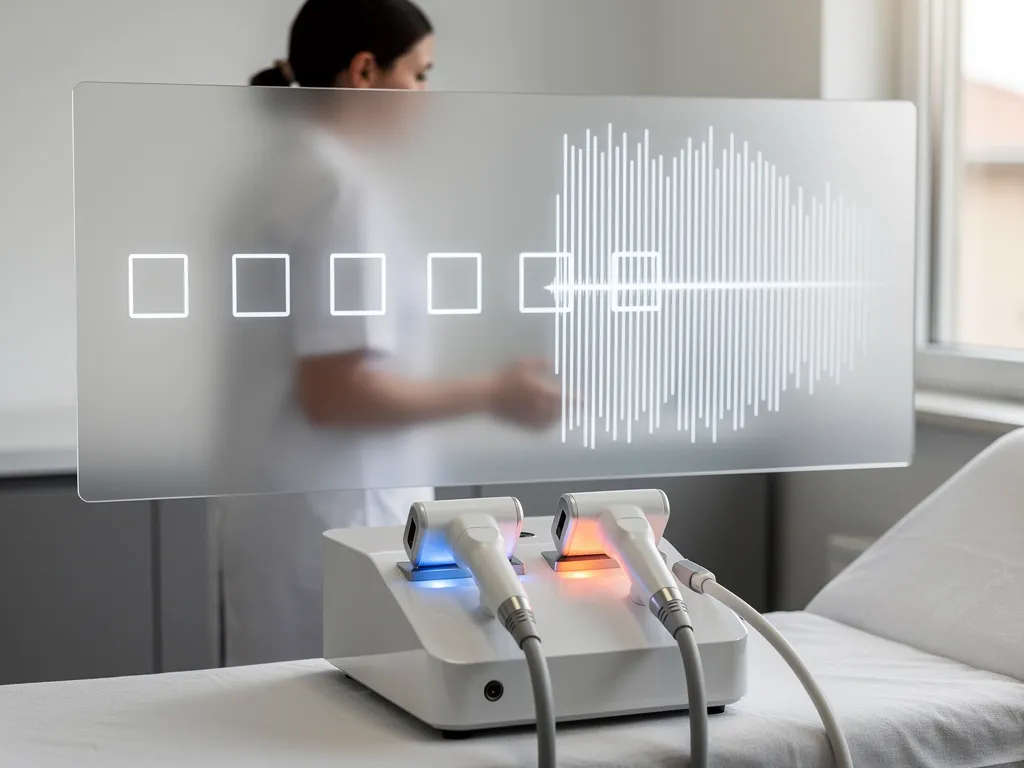
A picosecond vs nanosecond tattoo removal comparison starts with basic physics. A picosecond is one trillionth of a second. A nanosecond is one billionth of a second. Picosecond pulses are 1,000 times shorter than nanosecond pulses. This difference defines how each laser interacts with tattoo ink.
What Is a Picosecond Compared to a Nanosecond?
A picosecond measures one trillionth (10⁻¹²) of a second. A nanosecond measures one billionth (10⁻⁹) of a second. The pico laser vs traditional laser tattoo distinction hinges on this thousandfold gap in pulse duration.
Why Does Pulse Duration Matter Clinically?
Shorter pulses stay within the thermal relaxation time of ink particles. The PicoWay tattoo removal benefits include confining energy to the ink target. Heat does not spread to surrounding tissue. Nanosecond pulses exceed that relaxation window. A Q-switched laser is an older nanosecond device that relies more on heat, which conducts into adjacent skin and increases burn risk. The Candela PicoWay Ottawa platform uses pure photoacoustic shockwaves to shatter ink mechanically rather than thermally.
Fastest laser tattoo removal outcomes depend on this mechanical advantage. Picosecond pulses fragment ink into finer particles. The body clears those particles more efficiently. Fewer sessions are typically required.
The ‘Pebbles vs. Dust’ Analogy: How PicoWay Shatters Ink
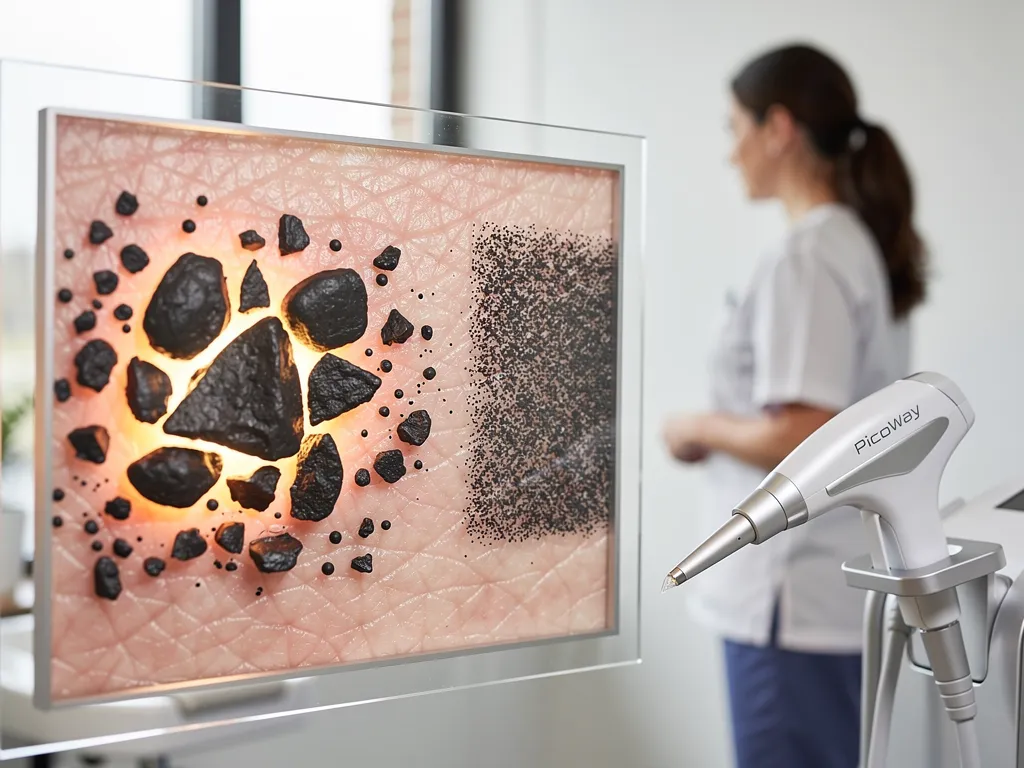
Traditional Q-switched lasers heat ink particles until they fracture into pebble-sized fragments. The Candela PicoWay® system takes a fundamentally different approach. Picosecond vs nanosecond tattoo removal technology reveals a stark contrast: PicoWay delivers ultra-short pulses measured in trillionths of a second, generating pure photoacoustic shockwaves. This mechanical energy shatters ink into microscopic dust-like fragments without thermal damage to surrounding tissue.
The body’s immune system clears these fragments through macrophages, specialized cells that engulf and eliminate foreign material. Macrophages process microscopic dust far more efficiently than larger pebble-sized debris. Larger fragments from older pico laser vs traditional laser tattoo methods overwhelm this natural clearance mechanism, leaving residual ink trapped in the dermis.
Why does particle size determine clearance speed?
Macrophages operate like cellular filters with a strict size limit. Dust-sized particles pass through rapidly. Pebble-sized fragments clog the system, requiring multiple treatment cycles to break down incrementally. This biological bottleneck explains why fastest laser tattoo removal outcomes depend on initial particle fragmentation quality.
How many fewer sessions does this translate to?
Fewer total sessions become possible because each PicoWay treatment clears more ink. The Candela PicoWay® platform’s photoacoustic action reduces the number of appointments needed compared to Q-switched alternatives. Ottawa clients pursuing picoway tattoo removal benefits experience this efficiency directly: the immune system clears dust in weeks, not the months required for larger fragments.
Thermal Heat Damage vs. Pure Photoacoustic Pressure
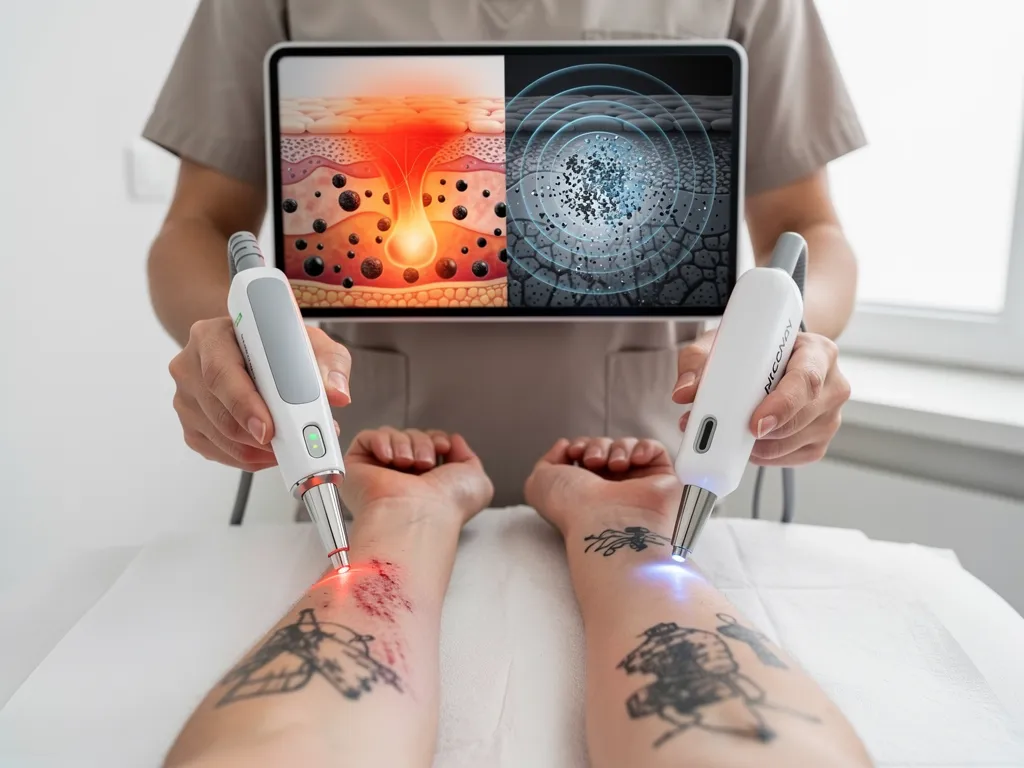
The fundamental difference between picosecond vs nanosecond tattoo removal lies in how each laser interacts with ink and skin. Older Q-switched lasers rely on photothermal heating. The PicoWay vs Q switched laser comparison reveals that Q-switched devices use nanosecond pulses that heat ink particles until they fracture, transferring significant thermal energy to surrounding tissue. This heat-based mechanism carries higher risks of epidermal burning and post-inflammatory hyperpigmentation.
The Candela PicoWay® platform operates on an entirely different principle. It delivers pure photoacoustic shockwaves: mechanical energy that shatters ink into microscopic dust-like fragments without thermal damage to healthy skin. This absence of heat transfer minimizes blistering and scarring risk while enabling more comfortable healing on sensitive or previously tattooed skin.
How does a photoacoustic laser remove ink without burning skin?
Photoacoustic energy creates a pressure wave that physically breaks ink apart. No heat buildup occurs in the dermis. The Candela PicoWay® achieves this through ultra-short picosecond pulses that target only the pigment, leaving collagen and surrounding tissue intact.
Why do Q-switched lasers cause more blistering and scarring?
Nanosecond pulses dwell long enough to conduct heat outward from the ink particle. That thermal spread damages adjacent skin cells. Blistering, epidermal burning, and textural scarring become more likely, especially on darker skin tones or over previously treated areas.
Treating Stubborn Colors and Multi-Wavelength Capabilities
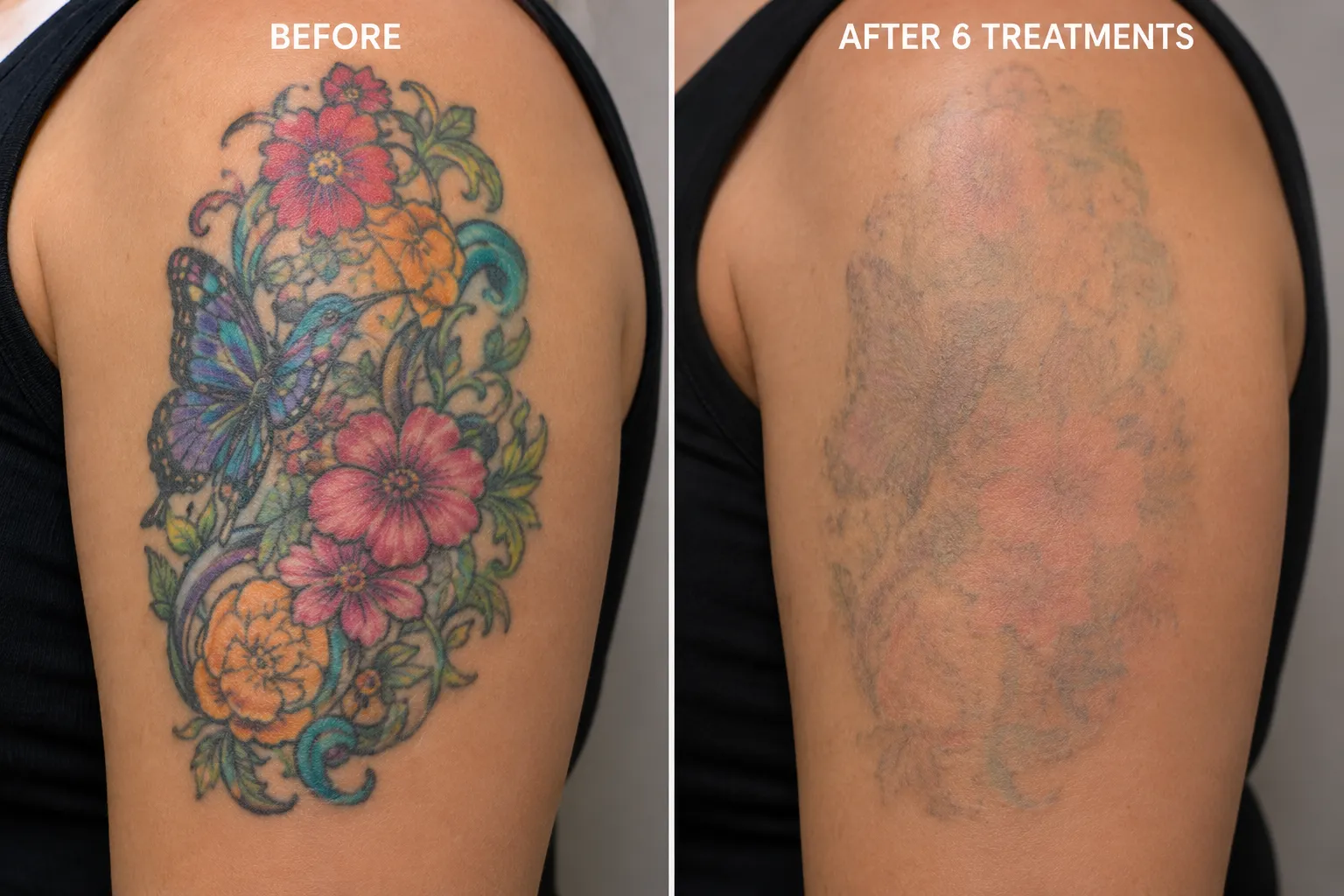
Stubborn ink colors demand specific laser wavelengths. The Candela PicoWay Ottawa platform delivers four distinct wavelengths to shatter every major pigment. Traditional picoway vs q switched laser comparisons reveal a critical gap. Older Q-switched devices operate with limited wavelength options. They frequently fail against blues, greens, and reds.
The picosecond vs nanosecond tattoo removal distinction matters most with difficult colors. Nanosecond pulses rely on heat. That thermal energy often leaves stubborn ink particles intact. Picosecond energy uses pure mechanical force. It fragments even resistant pigments into microscopic dust.
Why do certain ink colors resist traditional laser removal?
Standard Q-switched lasers lack the spectral range to target all pigments. Blues, greens, and vibrant reds absorb energy at specific light frequencies. A single-wavelength device cannot address this variety. The result is incomplete clearance and lingering tattoo remnants.
How does the PicoWay multi-wavelength system solve this?
The Candela PicoWay platform operates at 532 nm, 730 nm, 785 nm, and 1064 nm. Each wavelength targets a different color family. The 532 nm beam eliminates red and orange pigments. The 785 nm wavelength shatters green and blue inks. The 1064 nm setting handles black and dark outlines. This four-wavelength advantage ensures complete clearance of professional multicolor tattoos and cosmetic microblading. No single Q-switched device matches this spectral versatility.
Safety Across Fitzpatrick Skin Types (I to VI)
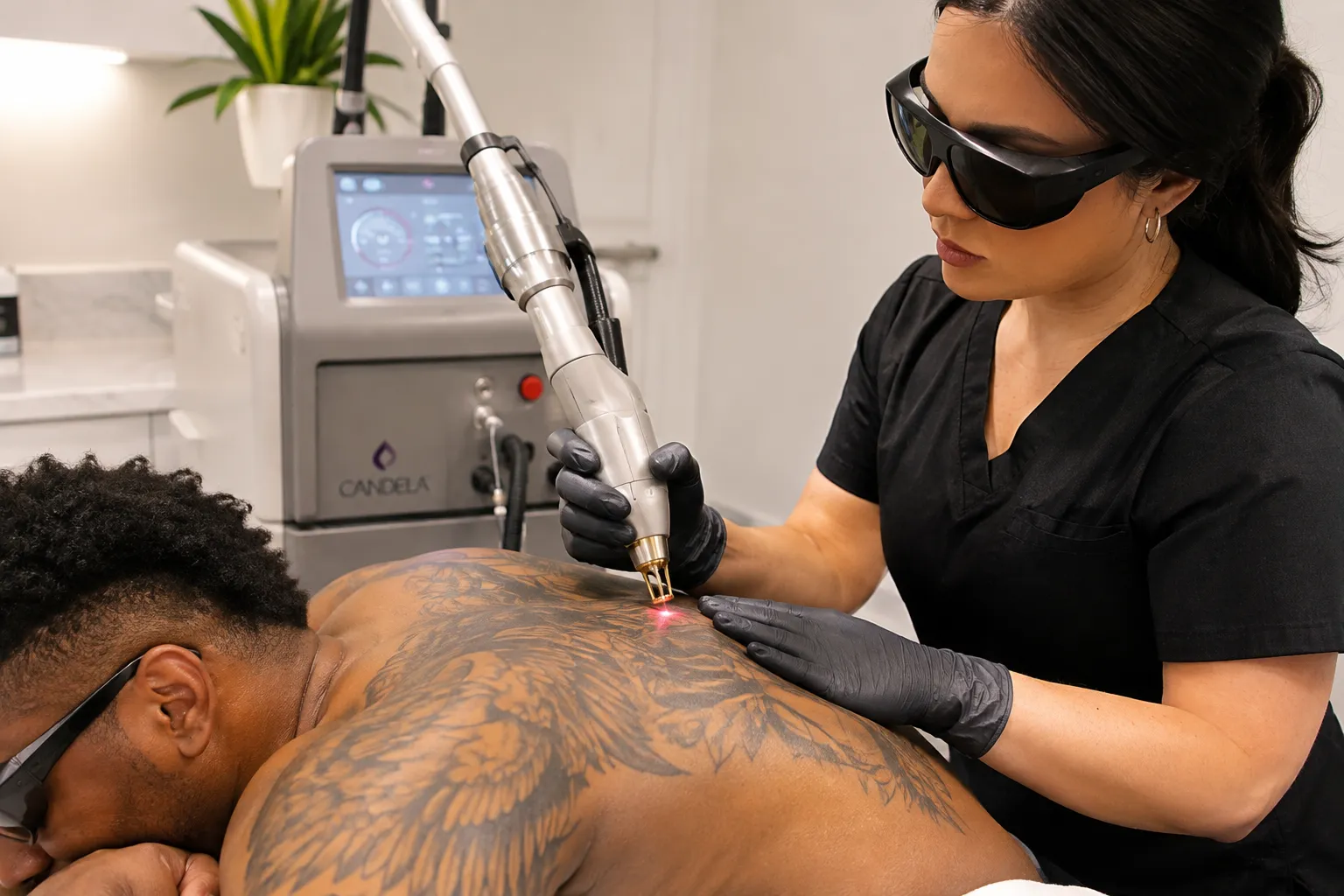
The Candela PicoWay Ottawa platform delivers safe tattoo removal across all Fitzpatrick skin types, from very fair (Type I) to deeply pigmented (Type VI). Older Q-switched lasers cannot make the same claim. Their nanosecond pulses rely on heat to break ink, and that thermal energy absorbs into epidermal melanin on darker skin. The result is a sharply elevated risk of post-inflammatory hyperpigmentation (PIH) and hypopigmentation.
How does picosecond technology protect darker skin tones?
Picosecond vs nanosecond tattoo removal safety hinges on energy delivery speed. PicoWay’s ultra-short pulses generate a pure photoacoustic shockwave. This mechanical action shatters ink while minimizing melanin absorption. For Fitzpatrick types IV, V, and VI, that difference eliminates the thermal trigger behind most pigmentary changes.
Which laser is safest for Fitzpatrick types IV through VI?
The pico laser vs traditional laser tattoo comparison reveals a clear safety gap. PicoWay’s photoacoustic energy treats all six Fitzpatrick skin types without the burn risk inherent to Q-switched thermal heating. Traditional devices often require reduced fluence on olive and brown skin, which slows clearance. PicoWay maintains full treatment efficacy while protecting the epidermis.
Clinical Comparison Summary: PicoWay vs. Q-Switched Table
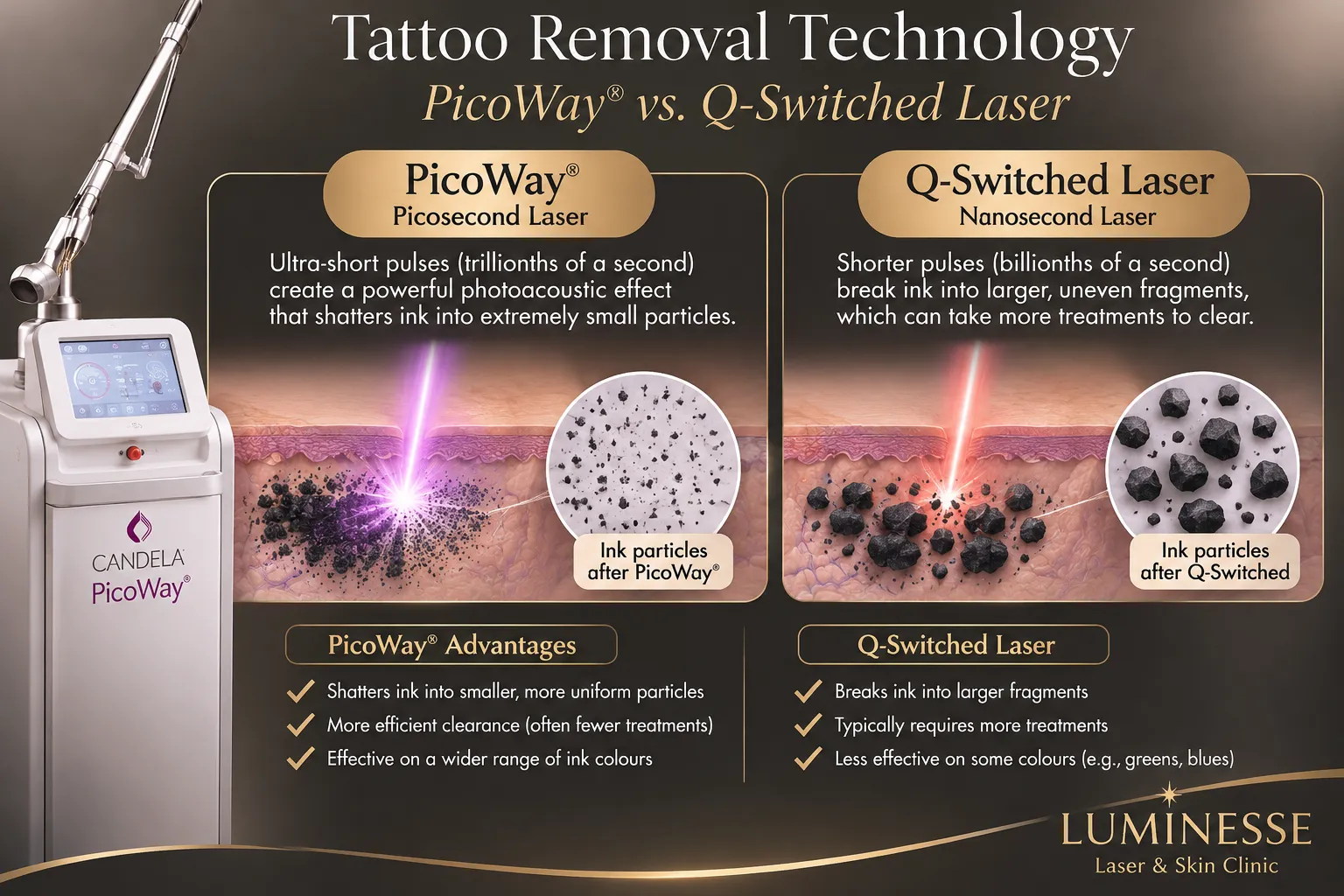
The picoway vs q switched laser comparison centers on one fundamental difference: pulse speed. PicoWay operates in picoseconds (trillionths of a second). Q-switched lasers fire in nanoseconds (billionths of a second). That thousand-fold speed gap changes everything about how ink particles break apart and how surrounding skin responds.
Luminesse Laser & Skin Clinic deploys the Candela PicoWay Ottawa platform for a reason. The device uses pure photoacoustic shockwaves to shatter ink mechanically. Traditional Q-switched lasers rely on photothermal heating, which transfers heat to surrounding tissue. This distinction defines the picosecond vs nanosecond tattoo removal experience. PicoWay fragments ink into microscopic dust-like particles without thermal damage. Q-switched devices heat the ink until it fractures, creating more collateral warmth.
Which technology clears tattoos faster?
The fastest laser tattoo removal technology available today is the picosecond platform. PicoWay clears ink in fewer sessions for most tattoos, according to clinical comparisons from Laser Eraser. The mechanical fragmentation process breaks pigment more efficiently than thermal methods. Clients pursuing pico laser vs traditional laser tattoo treatments see faster fading and fewer total appointments.
Is PicoWay safer for the skin than Q-switched lasers?
Yes. The picoway tattoo removal benefits include measurably lower risk of blistering, scarring, and pigmentary changes. Because the Candela PicoWay® platform avoids thermal damage, healthy skin remains protected throughout the removal process. Q-switched lasers carry higher thermal risk, especially on darker skin tones or densely inked areas.
Start Your Tattoo Clearance at Luminesse Laser in Ottawa
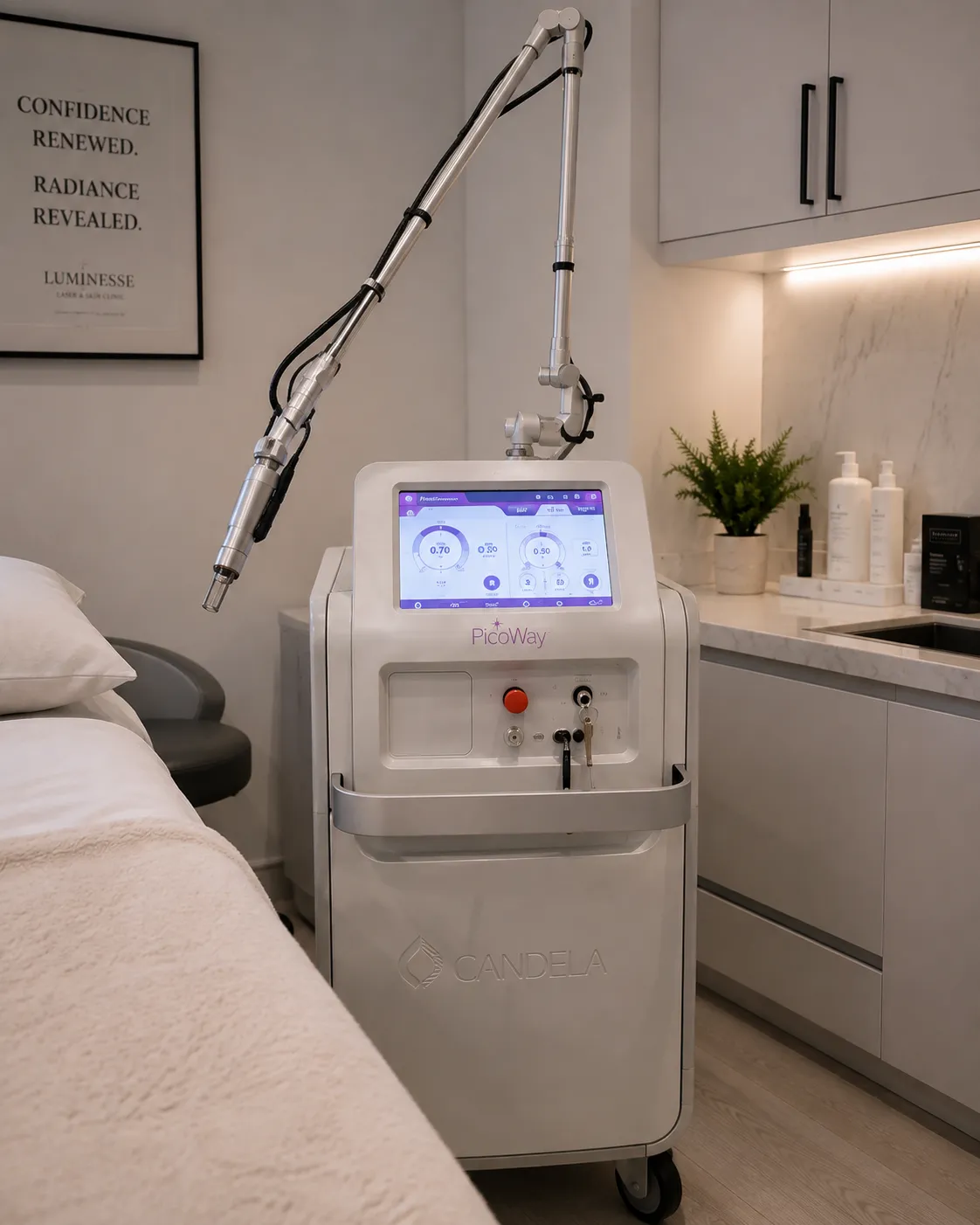
Luminesse Laser & Skin Clinic provides Candela PicoWay Ottawa treatments at 106 Colonnade Road North, Suite 230, in Nepean. The clinic combines professional expertise with the Candela PicoWay platform to deliver safe, effective tattoo removal for every skin type. Bilingual consultations are available in English and French.
What happens during a consultation at Luminesse?
A specialist evaluates the tattoo’s ink colors, depth, and location. The team then maps a personalized treatment plan using the PicoWay’s multi-wavelength technology. Clients receive a clear session estimate and can discuss tattoo removal costs in Ottawa before committing to any package.
How do Ottawa clients book their first session?
Booking operates entirely on the client’s schedule. The clinic offers 24/7 online appointment scheduling through Vagaro. Consultations are also available for those who prefer an in-person assessment before starting treatment.
Conclusion
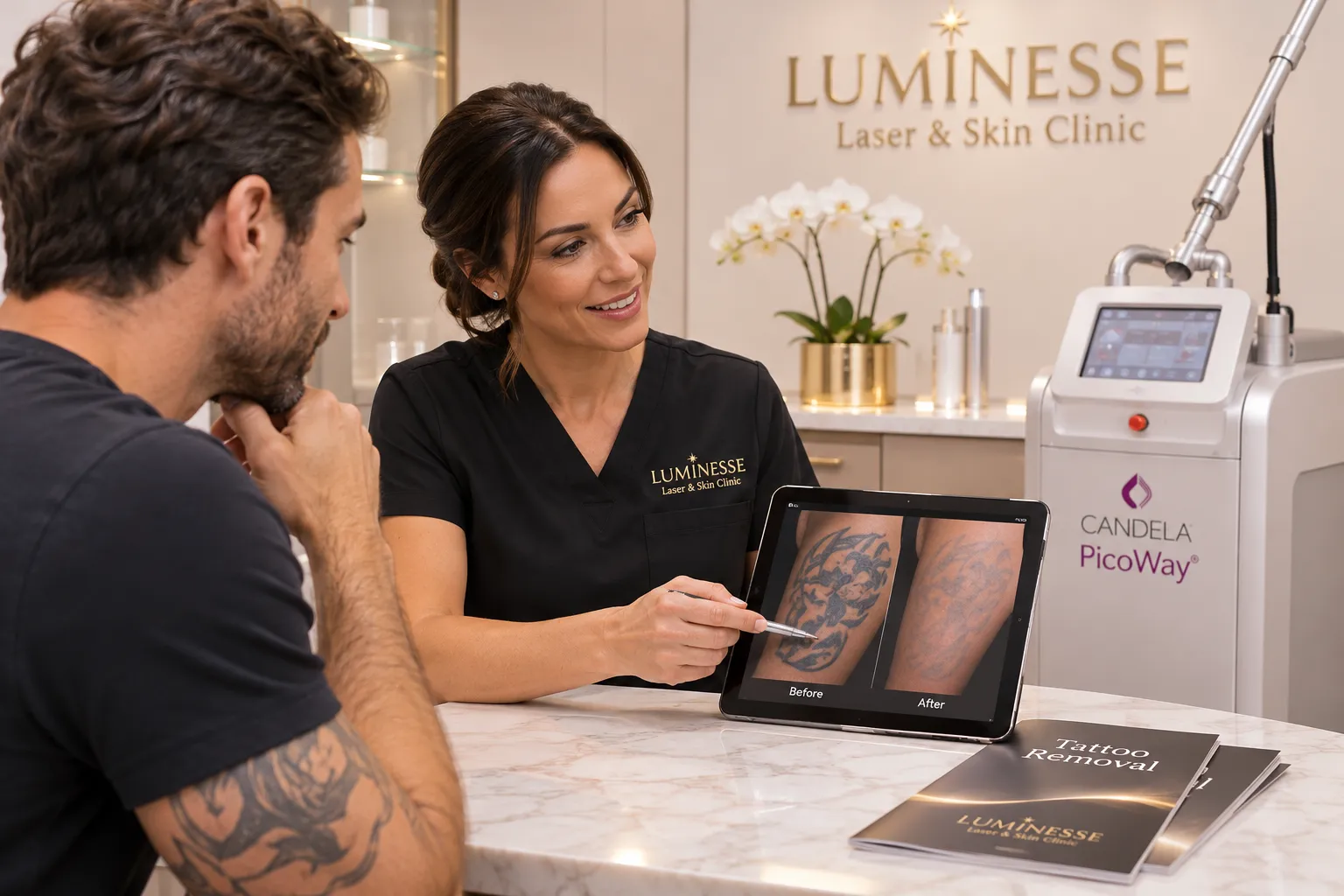
The choice between picosecond and Q-switched laser technology determines how quickly and safely a tattoo clears. PicoWay’s photoacoustic shockwaves shatter ink into microscopic dust without thermal damage, delivering faster results in fewer sessions while protecting all skin types. Clients seeking efficient, low-risk removal should schedule a consultation to evaluate their tattoo and receive a personalized treatment plan.

